
Every year, LMA Fest brings together some of the brightest minds in local media to discuss what’s working, what’s changing, and what’s coming next. This year’s event in Chicago was no different.
Representing Upland Second Street, Julie Foley and Tom McLaughlin spent the three-day event speaking with publishers, marketers, media executives, and technology leaders about the opportunities and challenges shaping the industry.
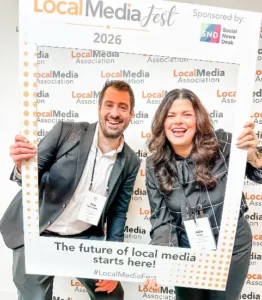
In this article, we’ve consolidated Julie and Tom’s conference notes, observations, and key insights, highlighting the trends and conversations shaping the future of local media.
Own Your Audience Before Someone Else Does
If there was a recurring theme throughout the event, it was the growing importance of first-party and zero-party data.
For years, publishers have relied heavily on search engines and social media platforms to drive traffic. Today, that strategy is becoming increasingly difficult to sustain. AI-powered search experiences are reducing clicks, social platforms continue to evolve, and audience acquisition has become more unpredictable than ever.
As a result, publishers are doubling down on the channels they control.
The phrase that surfaced repeatedly during conversations was simple:
“Audience comes first.”
That means giving people the content they signed up for, respecting their preferences, and building trust over time. It also means investing in newsletters, apps, memberships, subscriptions, and other owned channels that create direct relationships with readers.
The publishers making the most progress aren’t focused on chasing the latest algorithm update. They’re focused on building audiences that choose to engage with them again and again.
Because when you own the relationship, you own the opportunity.
For publishers, building first-party and zero-party data isn’t just a data strategy. It’s an audience strategy. The organizations seeing the strongest results are finding creative ways to encourage participation through contests, voting campaigns, surveys, newsletters, events, and other interactive experiences that transform anonymous traffic into known, engaged audiences.
AI Is Disrupting the Industry and Creating New Opportunities
No surprise here: AI dominated the agenda.
But unlike many industry events where the conversation focuses entirely on risks, LMA Fest offered a more balanced perspective. Attendees discussed both the challenges AI is creating and the opportunities it presents.
The challenge is clear.
AI-powered search experiences are increasingly answering questions without sending visitors to publisher websites. That means fewer clicks, fewer pageviews, and additional pressure on advertising-supported business models.
Several trends were repeatedly cited:
- AI-generated search summaries are reducing click-through rates
- Large publishers are experiencing significant traffic declines
- Zero-click searches continue to grow
- Referral traffic is becoming less reliable
- For many organizations, these shifts are forcing a rethink of SEO-led audience growth strategies
At the same time, publishers are finding practical ways to use AI within their own businesses.
Rather than treating AI as a replacement for people, attendees described it as an amplifier of human talent.
Use cases included:
- Accelerating research and content preparation
- Improving sales processes
- Reducing administrative work
- Streamlining workflows
- Identifying new revenue opportunities
- Leveraging MCPs and other emerging technologies to boost productivity
One of the most memorable quotes from the event came from Shannon Kinney:
“I’m not using AI to do my job for me. I’m using AI to make me better at my job.”
That sentiment seemed to resonate across the conference. The winners won’t be the organizations that try to replace people with AI. They’ll be the ones that empower their teams to work smarter and move faster.
Newsletters Continue to Punch Above Their Weight
As search traffic becomes less predictable, email is becoming more valuable.
Publishers repeatedly pointed to newsletters as one of the most effective ways to build direct audience relationships, increase engagement, and strengthen first-party data strategies.
The challenge isn’t proving the value of newsletters.
The challenge is growing them.
Many attendees noted that list growth has slowed, particularly for local media brands. While segmentation is now common practice, publishers are looking for new ways to acquire subscribers and increase the value of existing audiences.
Strategies discussed included:
- Reader promotions and giveaways
- Best Of voting campaigns
- Short-form vertical video
- Automated direct-message campaigns that convert social followers into subscribers
An interesting side conversation emerged around email technology costs. Several delegates questioned whether some of the market’s traditional “entry-level” platforms still represent good value, with rising costs making them harder to justify as subscriber bases grow. For some publishers, the pricing gap between SMB-focused tools and enterprise solutions is narrowing, prompting a fresh look at platforms that offer stronger automation, richer audience insights, greater flexibility, and a higher level of strategic support.
The broader takeaway was clear: When publishers own the inbox relationship, they’re less dependent on platforms they don’t control.
Local Media Has a Marketing Challenge
Another interesting theme was centered on advertiser perception.
Many attendees expressed frustration that local advertisers often undervalue what local media organizations can deliver for their business.
The issue isn’t necessarily performance. It’s communication.
Publishers know the impact their brands have in local communities. Advertisers don’t always see that value in the same way.
Whether it’s audience reach, campaign effectiveness, attribution, or ROI measurement, a disconnect often exists between what media organizations provide and what advertisers believe they’re receiving.
The opportunity is significant.
Publishers that can demonstrate outcomes, prove business impact, and translate campaign performance into meaningful business results will have a distinct competitive advantage.
Selling impressions isn’t enough anymore. Advertisers increasingly want partners who can help them understand results and connect marketing activity to real business outcomes.
New Revenue Streams Are Becoming Essential
One thing became obvious throughout the event: revenue diversification is no longer a nice-to-have.
It’s a necessity.
Publishers shared a variety of ways they’re generating revenue beyond traditional advertising, including:
- Partnerships with content creators
- Community-focused events
- Sponsorship programs
- Branded content
- Philanthropic initiatives
- Civic partnerships
- New digital products and experiences
What stood out most was the advantage local media organizations still possess.
They’re closer to their communities.
They understand local audiences better than anyone else.
And they can respond more quickly to emerging trends and opportunities than larger organizations.
The most innovative publishers aren’t waiting for industry-wide solutions. They’re experimenting, testing new ideas, and finding creative ways to monetize the trust and engagement they’ve already built.
The Bottom Line
If there was one lesson that tied everything together, it was this:
Audience ownership is becoming the foundation of sustainable media growth.
As AI changes how people discover information, publishers can no longer rely solely on search engines, social platforms, or referral traffic to drive results. Instead, they’re investing in direct audience relationships, growing zero-party data, and strengthening channels they control.
At the same time, they’re embracing AI to improve efficiency, exploring new revenue streams, and leaning into the one thing technology can’t easily replicate: authentic community connection.
The publishers best positioned for the future won’t necessarily be the largest or the loudest.
They’ll be the ones that combine data with trust, innovation with authenticity, and technology with a deep understanding of their audience.
Perhaps the most encouraging takeaway from LMA Fest is that many of the industry’s biggest challenges have the same underlying solution: building stronger direct relationships with audiences.
Whether the goal is growing newsletter subscriptions, increasing engagement, improving advertiser value, or creating new revenue streams, success increasingly comes back to knowing your audience and having channels you control.
In a world where search algorithms, social platforms, and AI experiences continue to evolve, zero-party data and audience trust are becoming two of the most valuable assets a publisher can own.
Because while platforms, algorithms, and technologies will continue to evolve, one thing remains constant:
A loyal audience is still the most valuable asset any media organization can own.
Looking for more best practices, timely articles, and case studies to be sent right to your inbox? Sign up for our Lab Newsletter!


Julie is the Senior Customer Success Manager at Second Street and a former client in local media. Her best advice for driving the most success with your revenue and audience engagement strategy is to include promotions in every business initiative.